
What if the most dangerous part of a surgical procedure isn’t the operating room, but the gaps in your patient’s digital history? For many Swiss clinics, the daily reality of a surgery document management system for clinics involves a disjointed mix of email threads, paper consent forms, and high-resolution images stored in disconnected folders. This fragmentation creates unnecessary friction and compromises clinical continuity. You likely feel the weight of this complexity when a pre-op instruction is misplaced or a post-op follow-up isn’t tracked with absolute precision.
This guide demonstrates how a unified surgery document management system for clinics eliminates fragmented records to ensure total traceability from the first inquiry to the final recovery stage. You’ll discover the logic of a workflow that prioritizes structural integrity and professional elevation. We will examine the transition from administrative clutter to a single source of truth, focusing on how automated follow-ups and Swiss-level data security protect your patients and your practice’s reputation. It’s time to replace operational friction with a system designed for the highest clinical standards. This is the path to a more organized, secure, and methodical surgical practice.
Key Takeaways
- Learn why traditional file-sharing services fall short of the rigorous standards required for surgical clinics and how to evolve beyond simple digital folders.
- Discover how a dedicated surgery document management system for clinics centralizes the entire patient lifecycle into a single, traceable source of truth.
- Identify the critical differences between generic hospital-wide ERPs and the specialized communication tools needed for boutique surgical environments.
- Implement a methodical five-step workflow to map every patient touchpoint from the first inquiry to automated post-operative safety checks.
- Leverage the power of shared inboxes and AI ticketing to maintain absolute clinical continuity and GDPR-compliant data security.
Beyond Digital Folders: The Evolution of Surgery Document Management
Storage is no longer the primary challenge for the modern surgical practice. Today, the focus has shifted toward the intelligent integration of data. A sophisticated surgery document management system for clinics does not merely archive files. It organizes the entire clinical narrative. While traditional cloud storage solutions offer a place to “drop” files, they lack the structural integrity required to manage the high-stakes environment of a Swiss surgical clinic. They offer passive storage. You need active clinical workflow integration.
This evolution represents a move away from static folders toward a system that mirrors the patient journey. Effective management ensures that every consent form, pre-operative instruction, and post-operative image is tethered to the patient’s identity and their specific surgical timeline. This transition reduces medical liability by creating a complete audit trail. It also eliminates the administrative friction that occurs when staff must hunt through disparate platforms to find a single critical note. True clinical continuity relies on this seamless fusion of documentation and communication.
The High Cost of Fragmented Patient Records
Information silos are the silent enemies of surgical excellence. When patient history is scattered across personal email inboxes, physical folders, and isolated imaging software, the risk of error increases. A missing pre-op instruction can lead to a cancelled surgery. A lost consent form can create a legal nightmare. These fragments don’t just delay preparation; they cause administrative burnout. Your team spends more time reconciling data than caring for patients. This chaos compromises the systematic documentation of a single patient’s medical history, making it nearly impossible to maintain a clear, chronological view of care.
Core Components of a Clinical DMS
A specialized surgery document management system for clinics must go beyond the capabilities of generic healthcare software. It requires specific features to handle the complexity of surgical cases:
- Unified Communication Logs: Every email, voice message, and note must be linked to the patient’s record in real time.
- Surgical Image Management: The system must handle high-resolution before-and-after images alongside clinical notes without compromising speed or security.
- Traceable Document Versioning: You need to know exactly which version of a consent form was signed and when it was modified.
By centralizing these elements, you create a single source of truth. This order is the foundation of patient safety and operational efficiency. It allows your staff to focus on the patient rather than the process.
Centralizing the Surgical Lifecycle: From Initial Inquiry to Post-Op
Clinical continuity begins long before the patient enters the operating room. It starts with the first digital touchpoint. A robust surgery document management system for clinics treats every interaction as a building block in a larger narrative. By implementing a “One Client, One Ticket” structure, you ensure that the initial pricing inquiry remains tethered to the eventual post-operative recovery notes. This creates a single, unbreakable chain of information. It eliminates the risk of losing vital context during the handoff from administrative staff to the surgical team.
Linking early-stage email inquiries directly to the surgical plan is essential for high-stakes environments. When a patient asks a question about anesthesia three months before their procedure, that detail must be visible to the surgeon during the final pre-op review. Centralization ensures that administrative leads transition seamlessly into clinical documentation. This process removes the need for manual data entry and reduces the likelihood of human error. It’s a methodical approach to patient management that prioritizes safety and professional elevation.
Automating the collection of pre-surgery questionnaires and digital consents further strengthens this framework. Instead of chasing paper forms, your team can monitor the status of every document within the patient’s ticket. These files aren’t just stored; they’re integrated. Implementing a unified ticketing and documentation workflow allows your team to maintain this level of meticulous detail without increasing their administrative burden. This is how Swiss clinics maintain their reputation for precision and reliability.
Integrated Image Management for Surgeons
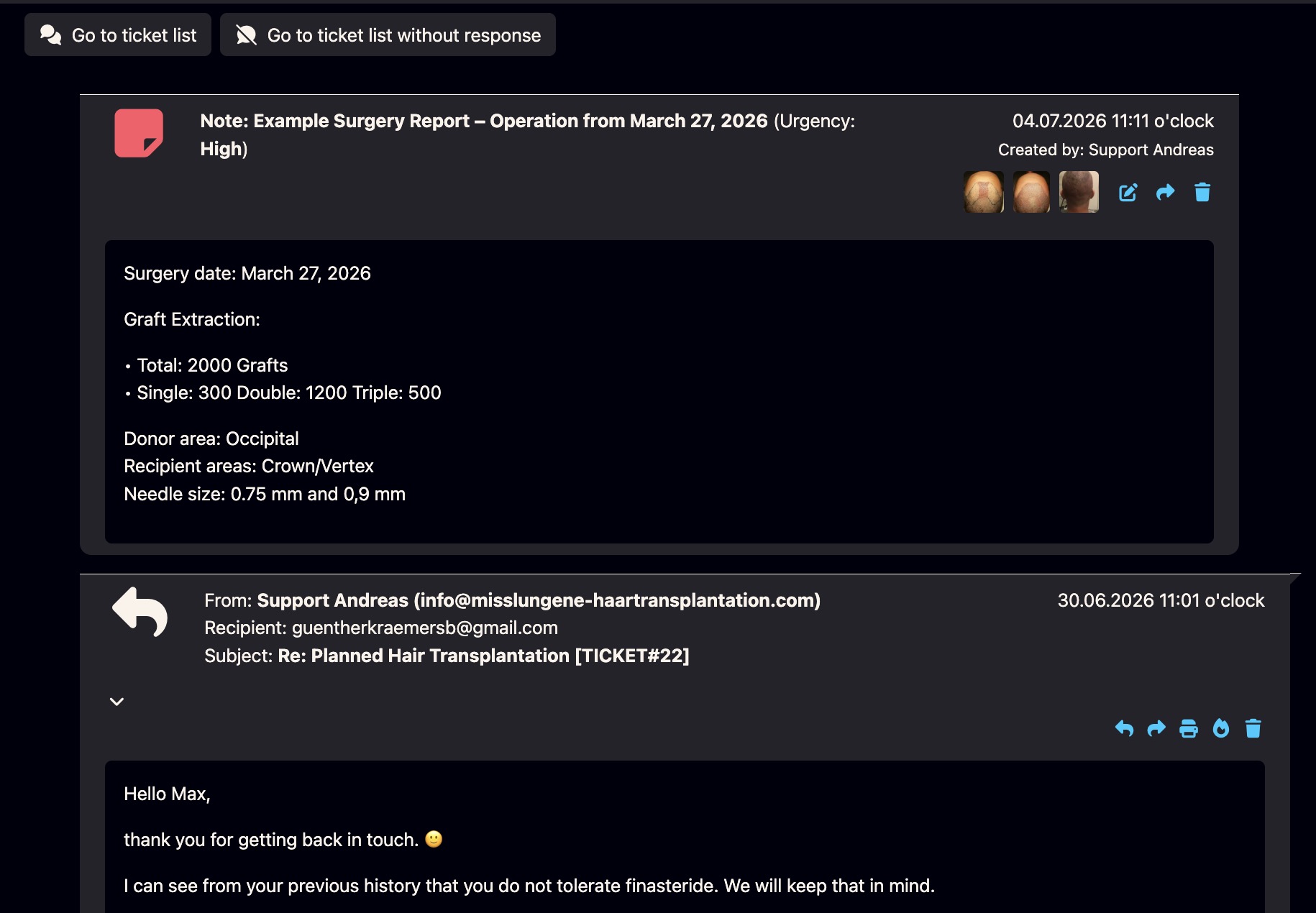
Precision in surgery requires a visual history. Storing high-resolution “Before and After” imagery directly within the patient ticket ensures that surgeons have immediate access to critical files during consultations. This integrated approach maintains image integrity and protects patient privacy by keeping sensitive medical records within a secure, encrypted environment. You no longer need to navigate external folders or disconnected imaging software. The history is there, exactly where it’s needed.
AI-Assisted Documentation and Summaries
Efficiency is a hallmark of a well-engineered system. Modern surgery document management systems now utilize AI to summarize extensive email threads, allowing surgeons to grasp a patient’s entire history in seconds. For specialized clinics in Switzerland serving an international clientele, automated translation ensures that language barriers never compromise clinical accuracy. These tools also assist in drafting precise follow-up instructions, ensuring that post-operative safety protocols are communicated clearly and consistently every time.
Why Generic Healthcare DMS Fails Specialized Surgical Clinics
Generic hospital-wide ERPs are engineered for administrative scale rather than clinical nuance. They prioritize billing codes and facility management over the delicate, highly visual narrative of a surgical journey. For a boutique clinic in Switzerland, these systems often feel like an operational burden. They’re too rigid. They lack the agility required for specialized workflows like hair restoration or aesthetic surgery. A dedicated surgery document management system for clinics understands that your needs are different. You require a system that elevates your professional standards rather than one that just checks a compliance box.
Shared inboxes are inherently superior to fragmented personal email for surgical teams. In a personal inbox, information is a secret. In a shared inbox, it’s a shared asset. This visibility ensures that no inquiry falls through the cracks and that every team member is aligned with the patient’s current status. It creates a culture of accountability and collective precision that generic systems simply cannot replicate. When your team works from a unified workspace, the transition from administrative lead to clinical patient is seamless and error-free.
Generic CRM systems also fail when handling the complexity of medical imagery. They treat high-resolution surgical photos as mere attachments rather than core clinical data. This leads to a loss of structural integrity. When a surgeon needs to compare pre-op and post-op states, they shouldn’t have to navigate a labyrinth of generic folders. They need immediate, contextual access within the patient’s history. A specialized surgery document management system for clinics ensures that these visual records are as organized as the clinical notes that accompany them.
The Problem with Multi-Platform Fragmentation
Fragmentation is more than an inconvenience; it’s a liability risk. When your team must copy data between a personal email and a separate document store, errors are inevitable. A digit misplaced or a note forgotten can compromise patient safety. Maintaining a clear audit trail across three or four different tools is nearly impossible. The hidden costs are also significant. Training staff on multiple disconnected platforms wastes time and resources that should be spent on patient care. Order is not just about aesthetics; it’s about reducing the cognitive load on your medical team.
Formality and Precision in Patient Communication
Surgical clinics operate at a higher register of professional tone. Every interaction must reflect the precision of the surgeon’s hands. Generic systems often use informal templates that don’t match the sophistication of a premium Swiss practice. Your documentation and communication must project authority and calm. Utilizing Swiss-hosted reliability is a strategic choice. It builds deep trust with international patients who value data sovereignty and meticulous organization. It reinforces the image of your clinic as a sanctuary of order and expertise. When your system is well-engineered, your patients feel the difference in every touchpoint.
Building a Traceable Surgery Workflow: 5 Steps to Total Continuity
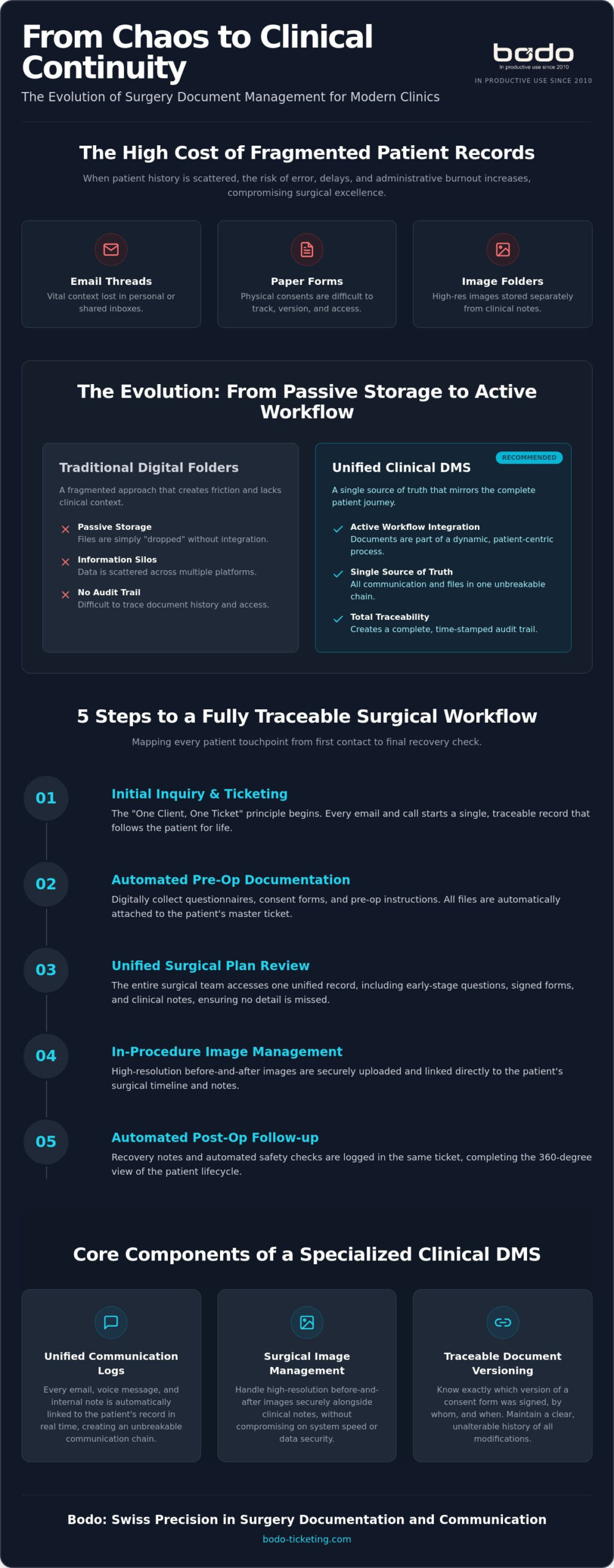
Establishing clinical order requires more than just high-quality software. It demands a philosophy of integration. Transitioning to a sophisticated surgery document management system for clinics requires a disciplined, step-by-step approach to ensure no detail is overlooked. This process moves your practice from a state of reactive file-gathering to one of proactive clinical management. By following a structured blueprint, you create a backbone for your organization that supports both patient safety and operational growth.
- Step 1: Centralize all patient touchpoints. Move every email, voice note, and inquiry into a single shared workspace. This ensures the entire team operates from the same history.
- Step 2: Map the surgical journey. Define clear stages from the initial inquiry through to long-term post-operative care. Visibility at each stage prevents patients from stalling in the pipeline.
- Step 3: Integrate image storage. Embed surgical photos and diagnostic images directly into the clinical timeline. This provides immediate visual context during every consultation.
- Step 4: Deploy AI tools. Use intelligent summarization to distill long histories and automated translation to bridge communication gaps with international patients.
- Step 5: Establish a Swiss-hosted archive. The final stage of an advanced surgery document management system for clinics is the creation of a permanent, secure, and GDPR-compliant record of every interaction.
Following this sequence allows you to optimize your clinic’s structural integrity with a traceable surgery documentation workflow that leaves nothing to chance.
Mastering Follow-Up Management
The patient relationship doesn’t end when they leave the clinic. It’s often where the most critical documentation begins. Automating post-op check-ins ensures that recovery protocols are followed and complications are caught early. By setting automated triggers for 6-month and 12-month clinical reviews, you maintain long-term clinical continuity. This meticulous tracking of client history doesn’t just improve safety; it fosters the deep trust that leads to long-term retention and high-value referrals.
Ensuring Compliance and Traceability
Traceability is the ultimate defense against administrative friction and legal risk. You must maintain a complete, immutable log of who accessed which surgery document and when. This level of transparency is essential when sharing surgical plans with external partners or specialized labs. A centralized, searchable archive ensures you’re always prepared for audits. It transforms your documentation from a liability into a strategic asset, providing the quiet confidence that comes from total organizational control.
Bodo: Swiss Precision in Surgery Documentation and Communication
Bodo represents the pinnacle of administrative order for the specialized clinic. It’s more than a repository for files. It’s a sophisticated surgery document management system for clinics that fuses communication with clinical documentation. By integrating an AI email ticketing system with specialized document storage, Bodo ensures that every patient interaction is captured within a single, traceable timeline. This removes the operational friction that plagues clinics relying on disconnected platforms. It’s a system designed for those who value meticulous organization and the reduction of risk.
The shared inbox is the heartbeat of this workflow. It allows your surgical coordination team to collaborate in real-time without losing visibility. When an inquiry arrives, it’s instantly categorized and linked to the patient’s history. This level of transparency is essential for maintaining clinical continuity. Migration to Bodo is a guided, methodical process. We understand that your surgical records are your most valuable clinical asset. Our transition protocols prioritize data integrity and minimal disruption, moving your practice from fragmentation to a state of total unity.
Swiss-hosted security is not a luxury; it’s a necessity for specialized clinics. Data residency matters because it reflects your commitment to patient privacy and professional standards. By keeping all surgical records on Swiss servers, you provide a level of security that generic, international platforms can’t match. This choice reinforces your clinic’s reputation for reliability and precision. It’s the final piece of the puzzle in building a practice that is as well-engineered as the procedures you perform.
Specialized Tools for Surgical Excellence
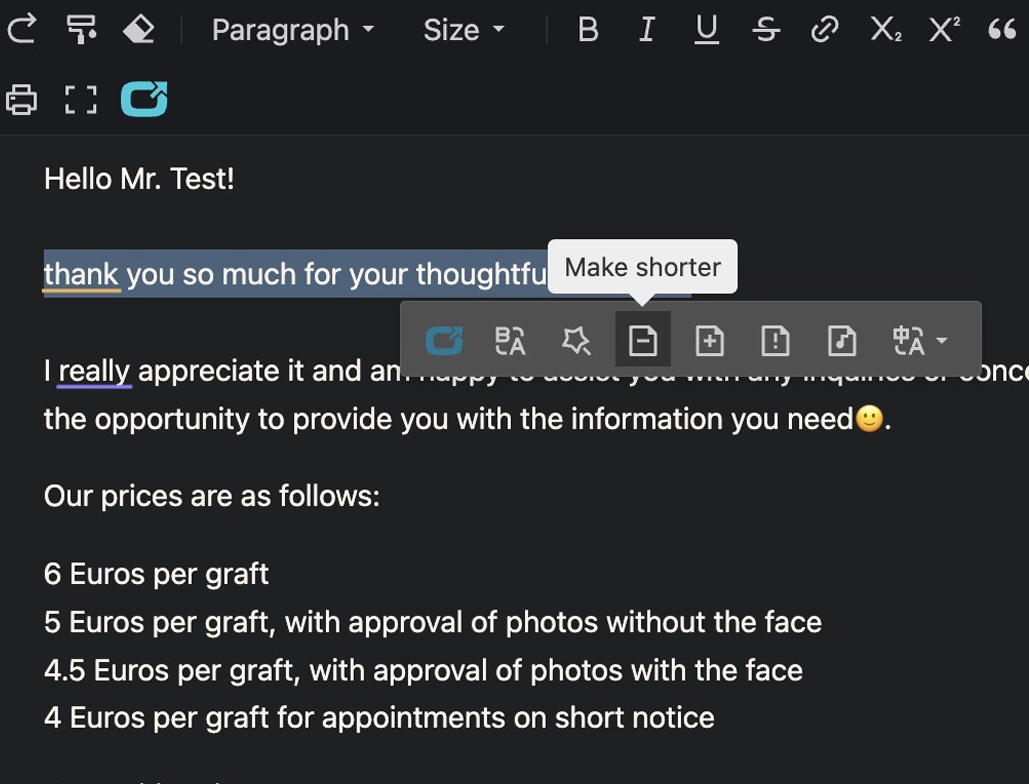
Excellence in surgery requires tools that match the surgeon’s precision. Bodo provides a high-precision CRM that manages surgery docs and images alongside every patient touchpoint. You can use Voice Messaging with Email to provide fast, personal updates to patients, adding a layer of reassurance that text alone cannot match. The AI Email Editor ensures that every communication maintains a formal, professional tone. It’s an essential backbone for organizations that cannot afford errors or lost information. These tools work in harmony to elevate your clinic’s service level.
The Bodo Advantage for High-Stakes Clinics
The logic of the Bodo system is simple: one client, one ticket. This structure ends the era of fragmented patient history and ensures that every consent form and post-op image is exactly where it should be. With Bodo, GDPR compliance and Swiss data privacy are standards you can rely on. This commitment to security reflects the high standards of Swiss engineering and the expectations of your most discerning patients. It’s time to bring a philosophy of order to your clinical documentation and communication.
Elevate your clinic with Bodo’s surgery management system.
Elevating Clinical Standards through Structural Integrity
Transitioning from fragmented records to a unified surgery document management system for clinics is a strategic necessity for any high-stakes practice. You’ve seen how centralizing the patient lifecycle ensures that every inquiry, consent form, and surgical image remains tethered to a single source of truth. This methodical approach eliminates operational friction and protects your practice from the risks of information silos. True clinical continuity is achieved when your documentation mirrors the precision of your surgical work.
Bodo provides the essential backbone for this transformation. With Swiss-hosted, GDPR-compliant security and specialized management for surgery docs and images, it’s engineered for the highest standards of professional excellence. Our AI-powered communication tools allow you to maintain a sophisticated Swiss tone while managing complex workflows with calm authority. It’s time to replace administrative clutter with a philosophy of order and traceability. Discover the precision of Bodo for your surgical clinic and experience the stability of a truly integrated system.
Frequently Asked Questions
What is a surgery document management system?
A surgery document management system for clinics is a centralized platform that organizes every patient record, communication, and surgical image into a single, traceable history. It moves beyond simple file storage by linking initial inquiries directly to post-operative recovery notes. This ensures a continuous clinical narrative. It provides the structural integrity required for high-stakes surgical environments where lost information is not an option.
How does an AI ticketing system improve surgical patient care?
It transforms chaotic email inboxes into a structured, prioritized workspace. Every patient request becomes a ticket that stays visible to the entire coordination team until it’s resolved. This visibility prevents missed follow-ups and ensures that surgeons have the full context before making clinical decisions. It’s a methodical way to reduce administrative friction and enhance patient safety through better organization.
Is Bodo GDPR compliant for medical data in Switzerland?
Bodo is fully GDPR compliant and meets the highest Swiss standards for data privacy. We prioritize data sovereignty by hosting all clinical records on secure servers located within Switzerland. This infrastructure ensures that sensitive medical data remains under the protection of Swiss law. It’s an essential requirement for clinics that value professional elevation and patient trust in a digital age.
Can I manage surgical before-and-after images within the same system?
You can store and retrieve high-resolution surgical images directly within each patient’s ticket. This specialized surgery document management system for clinics ensures that visual history is always contextually linked to clinical notes. Surgeons don’t have to navigate disconnected folders to find before-and-after photos. This integration allows for immediate comparison and better clinical decision-making during follow-up consultations.
How does the “One Client, One Ticket” structure work for clinical follow-ups?
This structure ensures that every interaction from the first inquiry to the final recovery stage is captured in a single thread. When a coordinator opens a follow-up task, they see the entire history without searching through disparate platforms. It creates a seamless transition between administrative leads and clinical documentation. This unity is the foundation of long-term patient retention and clinical continuity.
Why is Swiss hosting important for surgical clinics?
Swiss hosting provides a level of data residency and security that international cloud services cannot match. It ensures your clinic’s data is protected by Swiss privacy regulations, which are globally recognized for their rigor. For clinics serving international patients, this choice projects a sense of reliability and exclusivity. It’s a strategic investment in the structural integrity of your patient records.
Can Bodo replace a traditional medical CRM?
How does AI help with surgical documentation?
AI assists by summarizing extensive patient threads and translating messages from international clients in real time. It also utilizes an intelligent editor to help staff draft precise, professional follow-up instructions. These tools reduce the cognitive load on your medical team by automating routine administrative tasks. This allows your surgeons to maintain their focus on clinical excellence and patient outcomes.