
Chat Is Not a Client File.
WhatsApp, Instagram, Telegram, email, website forms, phone calls and social media can all generate leads. That is good. Customers should be able to contact your business where it is easiest for them.
But when a simple message becomes a real client case, it should not remain only inside a chat, a social media inbox or one employee’s mailbox.
Leads can start anywhere
Messenger apps, social media, forms, phone calls and email can all be useful first-contact channels.
A chat is not a client file
A chat usually has no complete case structure, no internal notes, no clean document handling, no follow-up dates and no clear long-term customer timeline.
Bodo keeps the client case structured
Emails, documents, images, notes, responsibilities, follow-ups and the full client history stay connected in one central workflow.
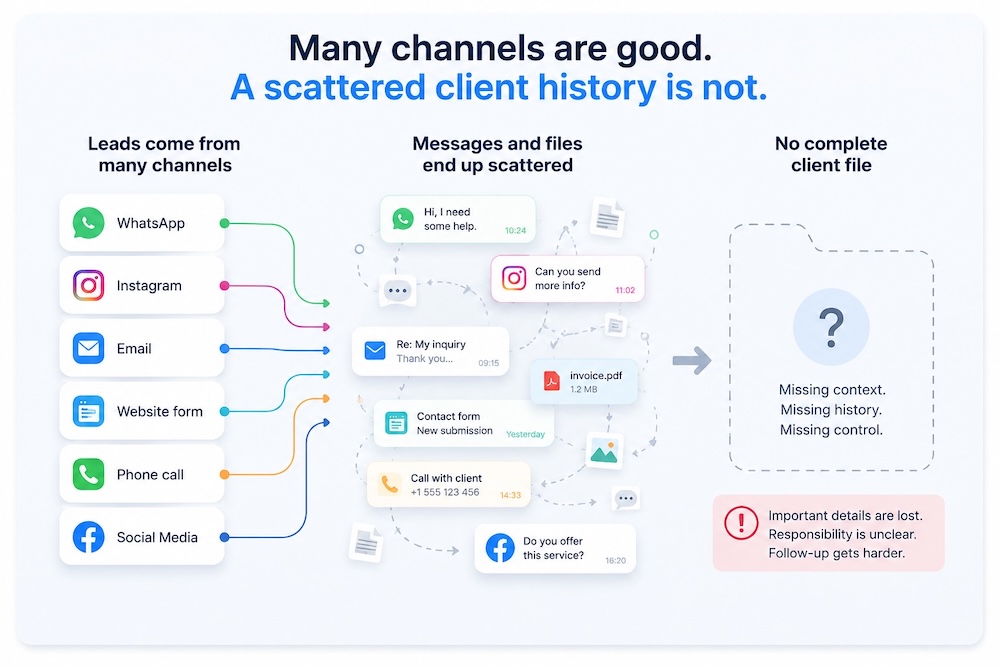
Many channels are good. A scattered client history is not.
Modern companies receive inquiries through many different channels. A potential client may write first on WhatsApp, send images through Instagram, call the office, later use a website form and then continue by email. That is normal today.
The problem starts when the channel becomes the client file.
A WhatsApp chat, an Instagram message thread or a single employee inbox may be practical for the first contact. But they are not a complete, structured and reliable client history for professional long-term work.
Why a chat is not a professional client file
The issue is not that messenger apps or social platforms are bad. The issue is that they are built for communication, not for long-term case management, internal documentation and structured client follow-up.
No complete case structure
A chat usually does not show the full professional context of a case: what happened before, what was promised, what still has to be done and who is responsible.
No internal documentation
Internal notes, team comments, decisions, task history and sensitive background information often do not belong inside an external chat with the client.
No reliable follow-up workflow
Professional client work needs follow-up dates, reminders and clear next steps. In a chat, these details are easy to overlook.
No clean document history
Images, PDFs, forms, files and attachments should remain connected to the client case, not scattered across phones, inboxes and separate tools.
No clear responsibility
When several employees communicate with the same client, it must be clear who is working on the case and what has already been answered.
No platform control
External platforms belong to external companies. They can change rules, restrict functions, review accounts or limit access. That risk may be rare, but for business-critical client history it matters.
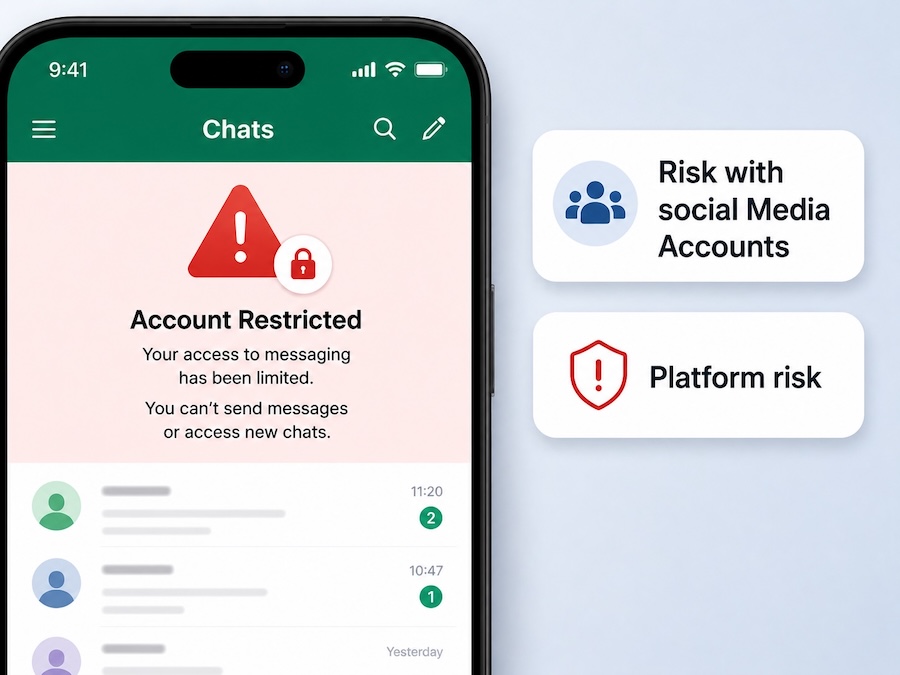
What happens if access is restricted?
Companies should be realistic. External platforms can be useful for reach, marketing and first contact. But they are not owned by the company using them.
WhatsApp’s own Business Messaging Policy states that access to WhatsApp Business Services may be limited or removed if content or actions violate its terms or policies. Instagram also provides official procedures for disabled accounts and review requests. This does not mean that every business is at risk every day. But it does show that companies should not build their most important customer history only inside external platforms.
The first contact can happen on WhatsApp, Instagram, Telegram or social media. But the long-term client file should remain in a structured system that the company can manage, document and search.
Sources: WhatsApp Business Messaging Policy, WhatsApp Business Terms, Instagram Help: disabled accounts
Use external channels for leads. Use Bodo for the client case.
The solution is not to reject WhatsApp, Instagram or other platforms. The solution is to separate the first-contact channel from the professional client file.
First contact
The lead starts where the client prefers: WhatsApp, Instagram, Telegram, phone, email, form or social media.
Structured handover
When the request becomes serious, the client is guided into a more structured process, for example through email or a website form.
Central client file
Messages, documents, images, notes, responsibilities and follow-up dates stay connected to one client history in Bodo.
Long-term control
The company can search, document, assign, follow up and continue the case without depending only on one external platform.
Existing chat history can also become part of the case.
In real business life, important information may already exist in WhatsApp chats or exported message histories. When useful, this information should not remain isolated from the client case.
WhatsApp can be an entry channel, not the final client file.
With Bodo, a WhatsApp export can be imported as notes so relevant context becomes part of the structured client history. The goal is not to make WhatsApp the central file, but to bring important information into a system your company can manage.
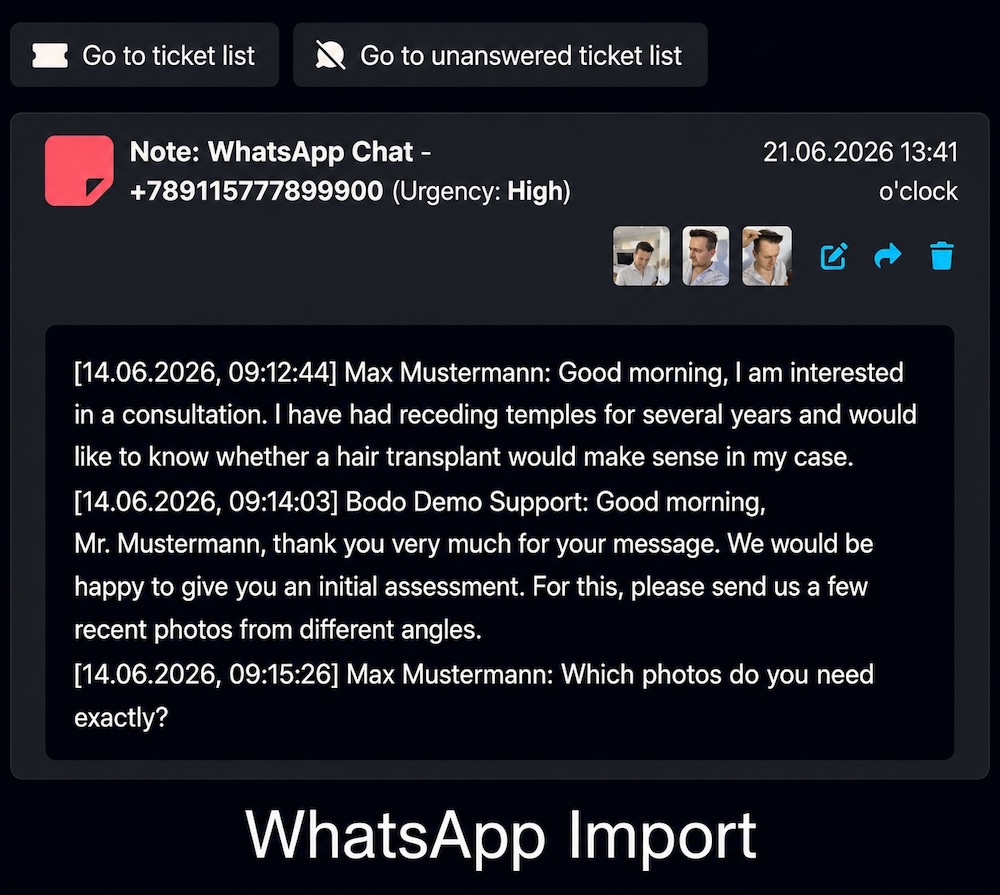
Bodo turns communication into a real client file.
Bodo was built for long-term client communication. Instead of creating scattered fragments across many channels, Bodo keeps the important parts of the case connected.
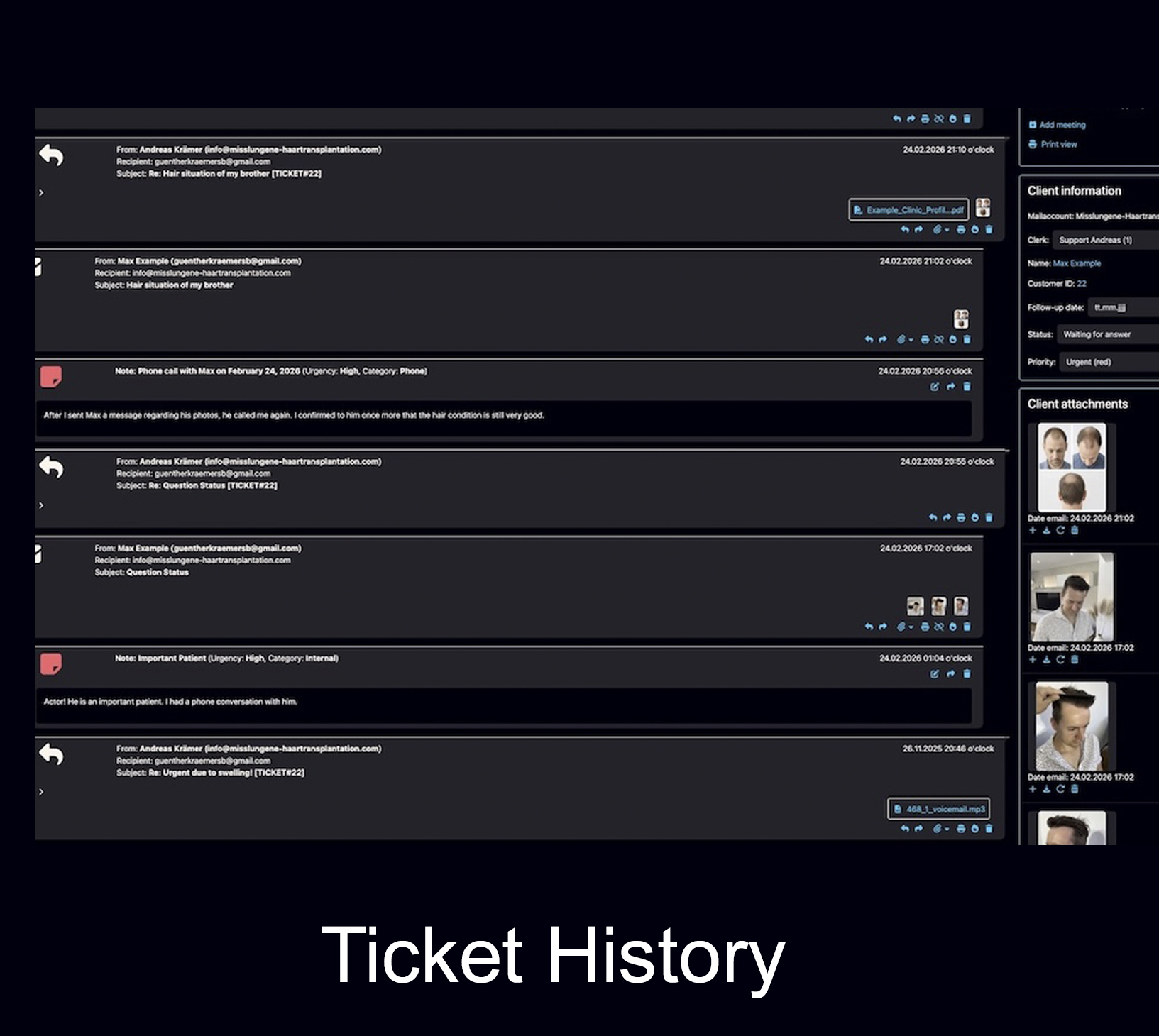
Complete client history
Every inquiry, reply, note, file and follow-up stays connected to one clear client history instead of being scattered across separate channels.
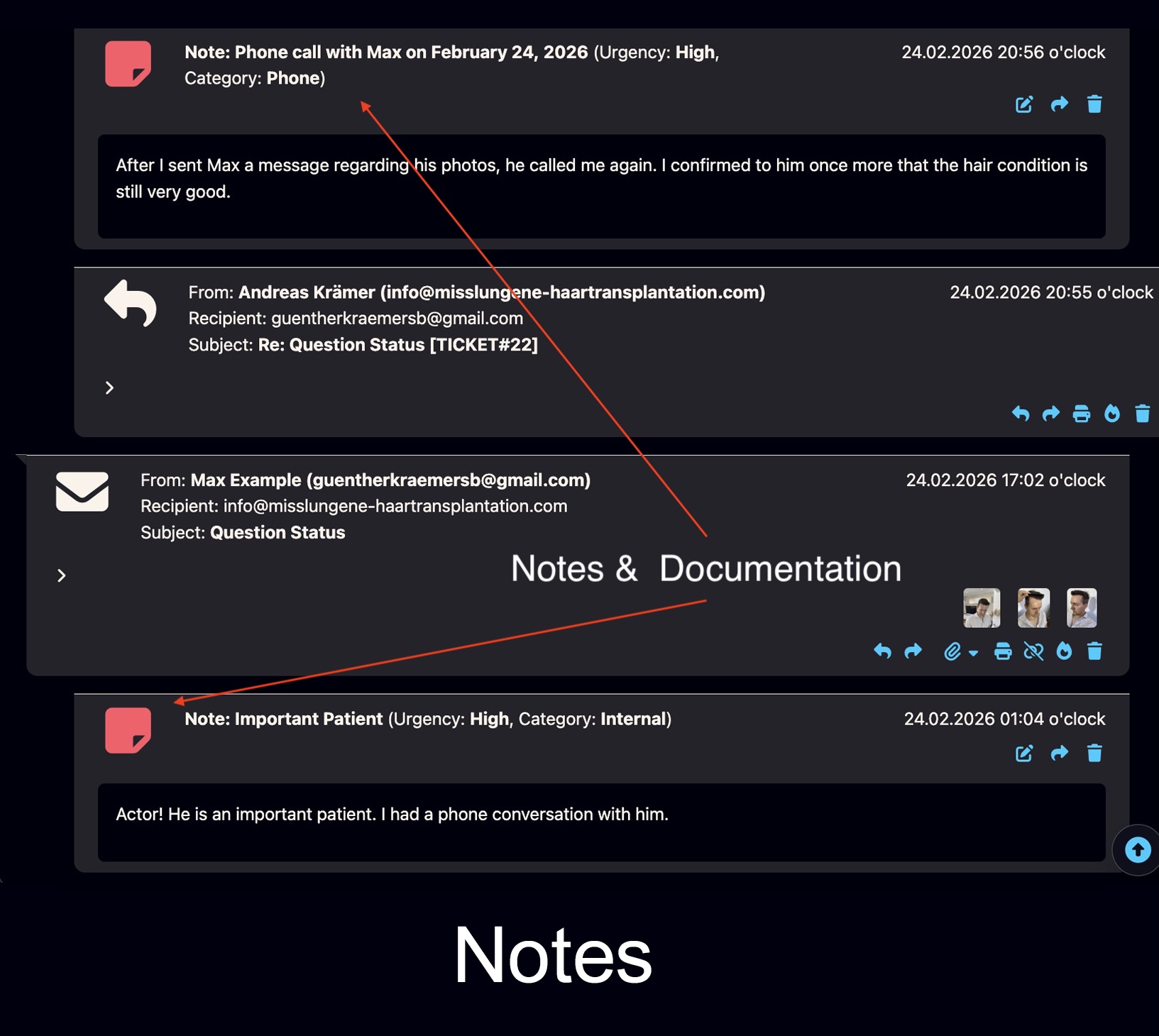
Internal documentation
Teams can add internal notes, categories and context directly to the case without exposing internal communication to the client.
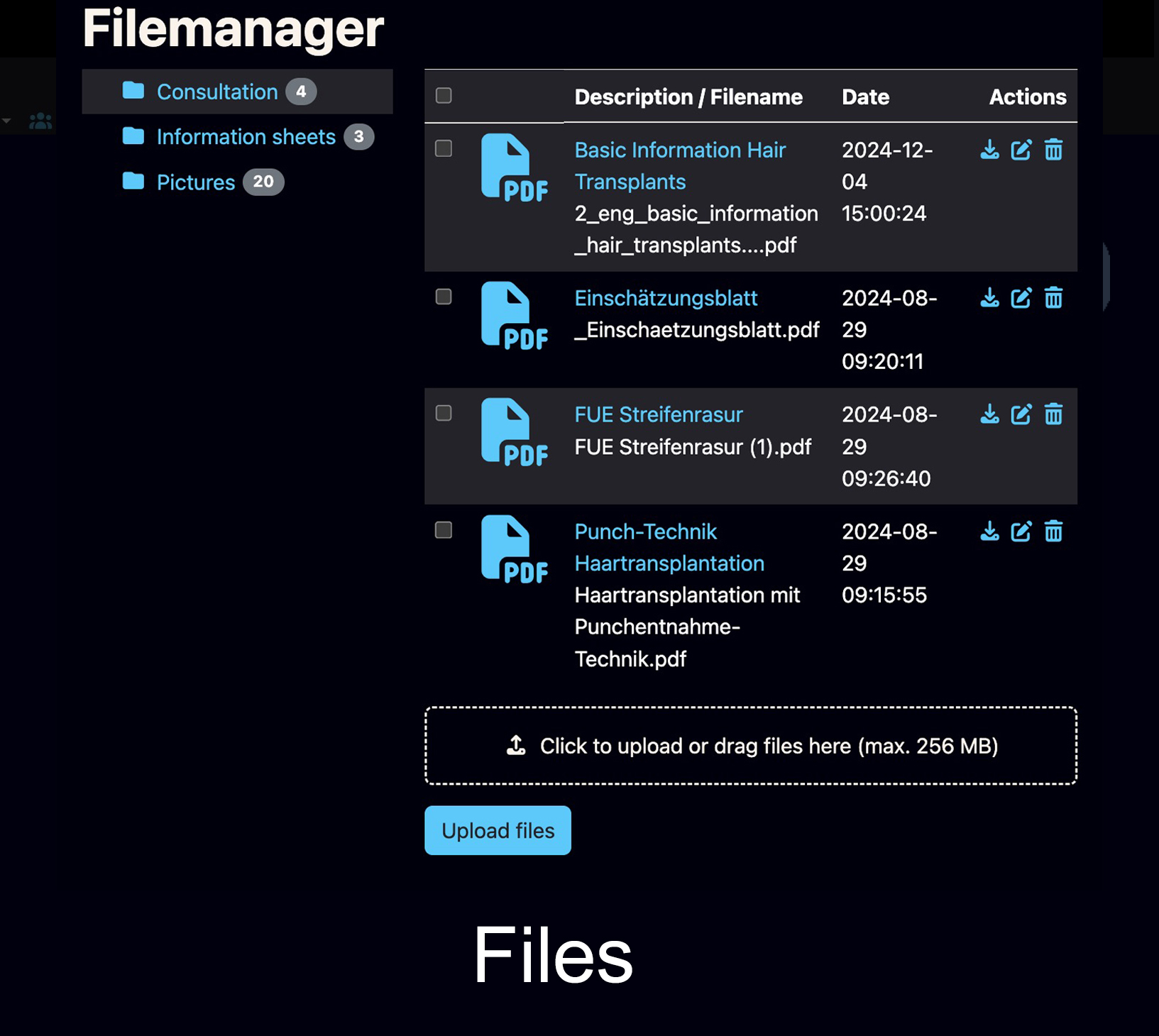
Documents stay connected
Files, images and documents remain attached to the client history instead of being scattered across chats, folders and devices.
A central file is also important for teams.
Platform independence is not only about account risk. It is also about daily work. If several people serve the same clients, the company needs clear responsibilities and a shared overview.
Employee assignment
A customer or ticket can be assigned to the right employee, so responsibility is visible and less dependent on private memory.
Staff working visibility
Bodo can show when another staff member is working on a ticket. This helps avoid duplicate answers and internal confusion.
Multiple email addresses
Clients often write from different addresses. Bodo can keep different email addresses connected to the same customer history.
AI cannot fix a missing client file.
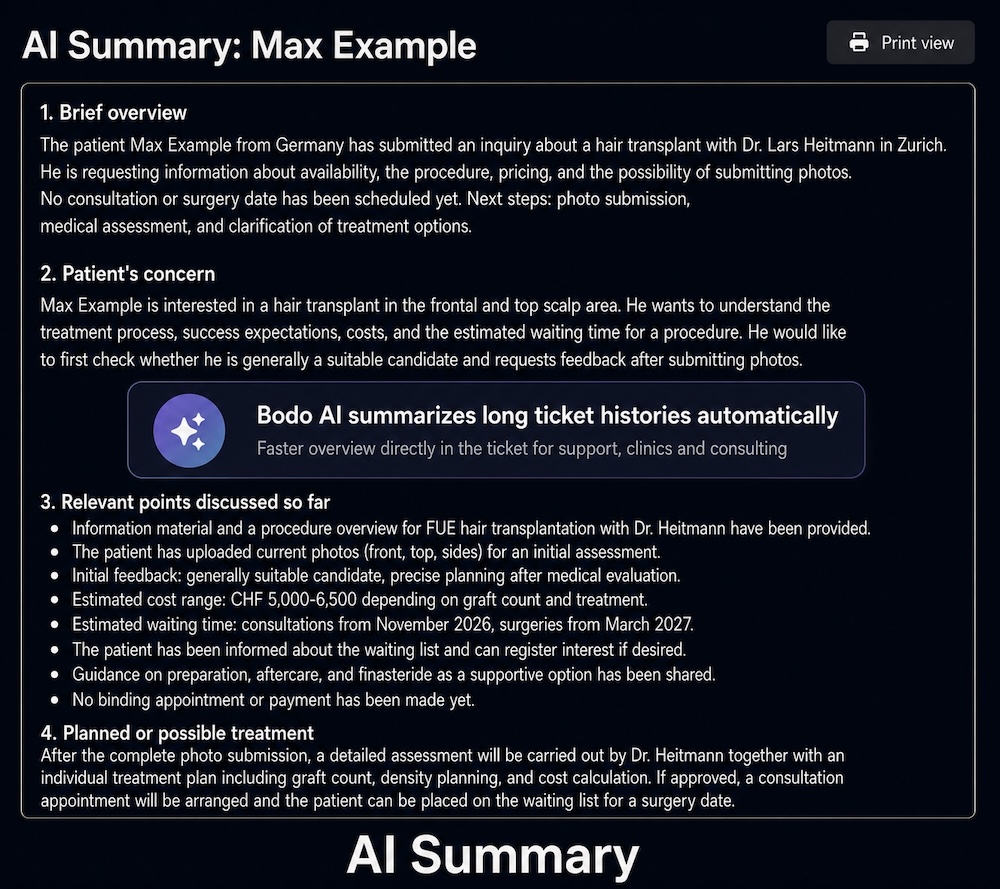
AI can help write faster, summarize long histories, translate messages and improve replies. But AI works best when the underlying communication is already structured.
AI writes. Bodo keeps structure.
With Bodo, AI assistance is not floating outside the workflow. It works inside the client context: ticket history, emails, notes, files and status information can stay connected to the same case.
Where this matters most
The principle applies to almost every company that handles more than simple one-time messages. The more important the case, the less it should depend only on a chat history.
Clinics and medical practices
Patient inquiries, images, documents, consultation history and follow-ups should not be scattered across messenger chats. This is especially important for hair transplant and cosmetic clinics that receive photos, consultation requests and sensitive client information.
Tax advisors and consultants
Client documents, deadlines, internal notes and long-term history require a professional system, not only an inbox or chat thread. Bodo helps tax advisors, accountants, trustees and consultants keep communication structured.
Sales and service teams
Leads may arrive from many channels, but follow-up quality depends on a central history, clear next steps, visible responsibilities and a workflow that does not depend only on one chat or one employee inbox.
Chat is not a client file.
Let clients contact you through the channels they prefer. But when a message becomes a real client case, keep the history, files, notes, responsibilities and follow-ups in one structured system.