
Messenger Account Restrictions: Why Client Data Needs Its Own System.
WhatsApp, Instagram, Facebook, Telegram and other messenger or social channels can be powerful ways to start a conversation with a customer. They are fast, familiar and convenient.
But they should not become the only place where business-critical client data lives. If an external platform restricts an account, disables access, changes its rules or limits a function, the company may suddenly lose access to conversations, leads, documents and history that matter for daily work.
Your client history should not depend on an account you do not fully control.
A messenger account can be useful for first contact. But if the full client history, files, images, notes and follow-ups remain only inside that platform, the business is exposed to access restrictions, policy changes, account reviews and platform dependency.
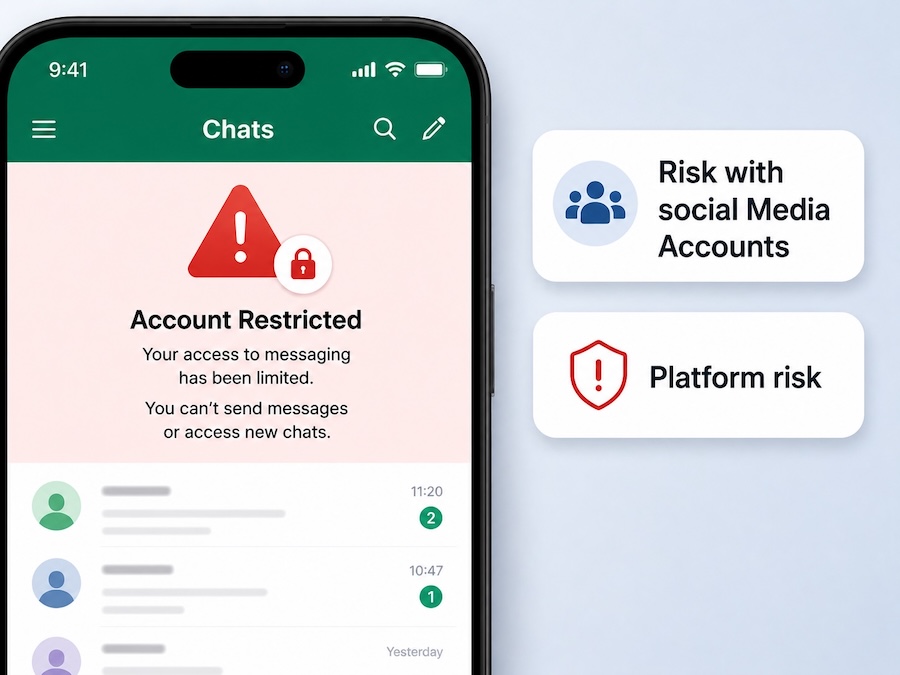
The risk is not the messenger. The risk is dependency.
This article is not an argument against WhatsApp, Instagram or other messenger tools. Clients often prefer these channels for quick first contact. That can be good for lead generation and responsiveness.
The problem starts when the channel becomes the client file. A business should not rely on an external platform account as the only place where conversations, documents, images, decisions, follow-ups and customer history are stored.
Messenger channels are entry points. They should not be the only business memory.
A professional client file needs structure, searchability, ownership, internal notes, responsibilities, documents, long-term history and controlled access. A messenger thread was not built to replace that infrastructure.
Messenger dependency is one risk. Inbox dependency is another. If the problem is Outlook, Gmail, shared mailboxes, forwarding, folders and lost attachments, read the related guide: Why a normal email inbox is not a client file.
Why account restrictions can become a serious business problem
Account restrictions are not only a technical inconvenience. For companies that keep client data only inside messenger channels, a restriction can affect revenue, service quality, documentation, compliance and trust.
Sudden loss of access
If an account is restricted, disabled or under review, employees may lose access to active conversations, leads, customer questions and important attachments at exactly the wrong moment.
Client history becomes trapped
A messenger thread may contain previous promises, images, quotes, documents and decisions. If that thread is the only history, the business can no longer reconstruct the case properly.
Follow-ups are interrupted
Many client relationships depend on timing. If follow-up information lives only in a chat, account problems can immediately affect open leads and future tasks.
No direct control over rules
Platforms can change policies, technical access, pricing, automation rules or enforcement processes. A company can comply carefully and still remain dependent on decisions made outside its own infrastructure.
Support and appeals can be slow
When an account issue happens, a company may have to rely on platform support, automated review systems or appeal processes. That is very different from controlling its own client file.
Data ownership becomes unclear
The company may own the client relationship, but not the platform, the account rules, the moderation process or the future availability of the communication channel.
Platform access can be limited. That is not theory.
WhatsApp’s Business Messaging Policy states that if content or actions violate terms or policies, access to WhatsApp Business Services may be limited or removed. WhatsApp also publishes information about account bans on the WhatsApp Business app. Instagram provides official help pages for disabled accounts and review requests.
This does not mean that every company is at immediate risk. It simply means that platform access is conditional. For a business, that distinction is important.
If the platform restricts your account tomorrow, can your team still see the client history, files, notes, responsibilities and follow-ups?
Official sources: WhatsApp Business Messaging Policy, WhatsApp Business account bans, Instagram disabled accounts
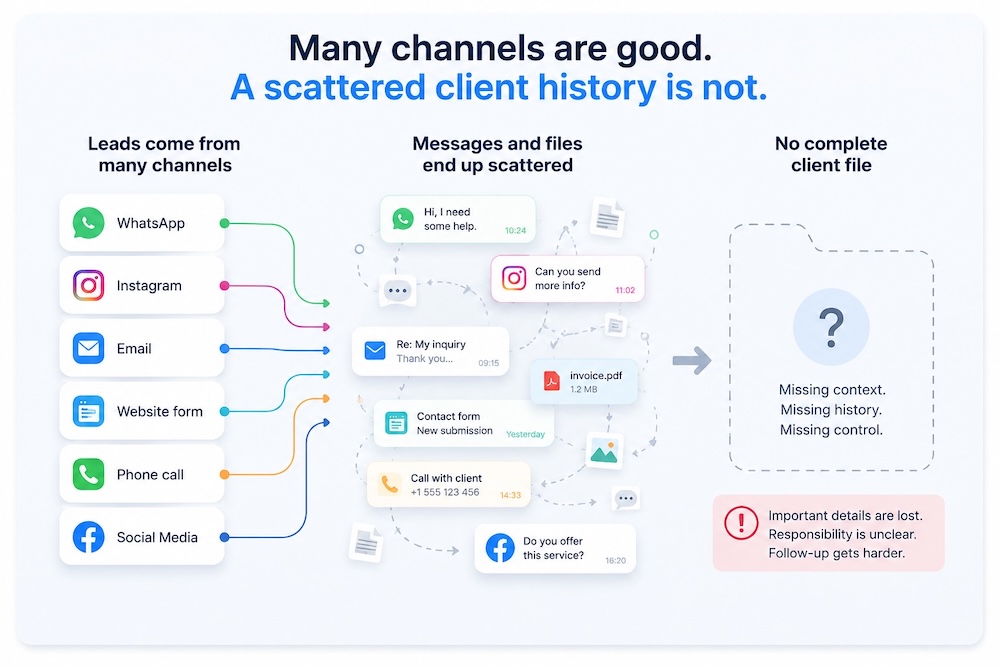
Businesses and users report the same pattern: access can disappear, and support may not be easy.
Public examples are not a substitute for legal advice or technical due diligence. But they show a real business pattern: many people and companies rely heavily on platform accounts, then struggle when access is restricted, disabled or unclear.
The Guardian: businesses reliant on Meta struggled after suspensions
The Guardian reported in August 2025 on small business owners who said Meta account suspensions affected their ability to operate, reach customers and prepare for business-critical periods.
Read the Guardian reportThe Guardian: Instagram account bans can damage income and reach
In another Guardian case, an entrepreneur described losing personal and professional Instagram accounts and having to rebuild after losing access to a channel that mattered for his business.
Read the Guardian articleReddit: WhatsApp Business accounts banned in a business portfolio
Reddit threads are anecdotal, but they show the practical anxiety businesses can face when WhatsApp Business accounts or numbers are banned, appeals are rejected or support is unclear.
View the Reddit discussionReddit: restored account, but phone number still banned
Another Reddit discussion describes a situation where a WhatsApp Business API account was restored, but the connected phone number still appeared banned in WhatsApp Manager.
View the Reddit discussionMessenger restrictions are only one part of the risk
Even if an account is never restricted, a messenger-first client file can still create structural problems for a company.
Client data is spread across channels
One customer may write on WhatsApp, send files by email, ask a question on Instagram and later call the office. Without a central file, the real case history becomes fragmented.
Responsibilities are unclear
When several employees respond through different channels, it becomes difficult to see who is responsible, what was promised and what still needs action.
Files and images lose context
Photos, PDFs, forms and documents should remain connected to the client case, not hidden in phone galleries, chat exports, downloads or private devices.
Internal notes do not belong in a chat
Professional teams need internal notes, decisions, warnings and context that should not be visible to the client inside the external conversation.
Compliance becomes harder
Depending on jurisdiction and setup, messenger use can raise questions around consent, address book synchronization, processing agreements, retention and access control.
Long-term history is fragile
If a client returns after months or years, the company needs the full story: previous messages, files, notes, promises, follow-ups and the latest status.
Messenger use can also create privacy and compliance questions.
Business communication is not only about convenience. If customer data, contact details, images or documents are handled through messenger tools, companies should understand the legal and technical setup they are using.
The Swiss SIDD Institute explains that using WhatsApp in a business context can be problematic when contact data is processed or transmitted without a sufficient legal basis. WhatsApp’s own Business Data Processing Terms also show that business use is not just a normal private chat situation.
Companies should define where the official client file lives, who has access, how records are retained, how internal notes are separated and how sensitive client information is handled.
Sources: SIDD: Is WhatsApp GDPR-compliant?, WhatsApp Business Data Processing Terms
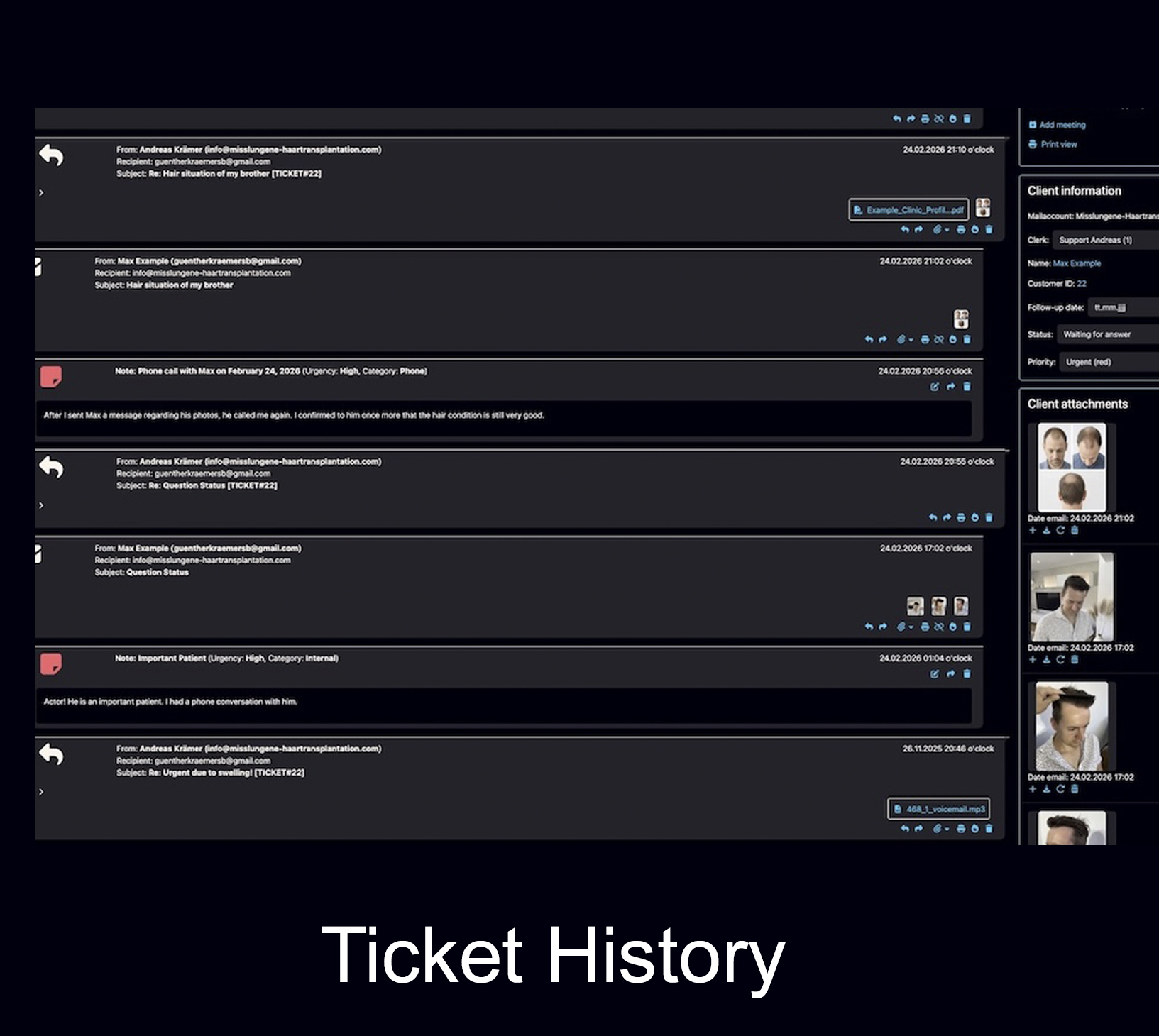
Use messengers for reach. Use your own system for the client file.
The answer is not to stop using messenger channels. The answer is to separate the entry channel from the permanent client record.
Let the lead start anywhere
WhatsApp, Instagram, Facebook, Telegram, website forms, phone calls and email can all bring first contact.
Move serious cases into structure
Once a conversation becomes a real inquiry, guide the client into a structured process and document the case centrally.
Keep the history in one place
Emails, files, images, notes, responsibilities and follow-up dates should remain connected to the same client history.
Reduce platform dependency
If a platform restricts access, the company still keeps its client file, documentation and workflow.
How Bodo reduces messenger dependency
Bodo is built around a simple principle: the channel may be flexible, but the client file should remain structured and under the company’s control.
One client, one history
Bodo keeps communication, emails, notes, files, follow-ups and responsibilities connected to a long-term client history instead of scattered across messenger threads.
Email as a stable communication base
Messenger channels can bring the first contact, but email remains a stable, professional and widely accepted communication layer for structured client work.
Files and images stay connected
Photos, documents, PDFs and other files remain close to the client case and do not disappear inside chats, phones or downloads.
Internal notes stay internal
Teams can document internal context, decisions and observations without mixing private team information into an external chat channel.
Follow-ups remain visible
Open leads, missing documents, waiting periods and future actions can be managed with follow-up dates rather than personal memory.
AI works inside the structure
AI can help summarize, rewrite, translate or draft replies, while the underlying client history remains organized and traceable.
The balanced view: messengers are useful, but they are not infrastructure.
It would be unrealistic to tell companies to ignore WhatsApp, Instagram or other messenger channels. Many clients use them every day. The professional answer is not avoidance. The professional answer is a clear separation of roles.
Use messengers for first contact and quick clarification
They are convenient and often reduce friction when a new lead wants to reach your company.
Do not leave serious cases only inside messenger threads
When a conversation becomes a real client case, the history should move into a structured system.
Keep business-critical data under your own control
Client history, documents, responsibilities and follow-ups should not depend on one external account.
Build a system that survives channel problems
If a messenger account is restricted, your company should still be able to serve the client and understand the case.
Continue reading
These related Bodo pages explain the same principle from different angles: messenger channels, client files, email ticketing, infrastructure and long-term customer history.
Frequently asked questions
Why are messenger account restrictions a business risk?
Messenger account restrictions are a business risk because client communication, contact history, documents, images and follow-ups may suddenly become difficult or impossible to access. If a company keeps its client history only inside a third-party messenger account, the company depends on a platform it does not fully control.
Should companies stop using WhatsApp, Instagram or other messengers?
No. Messengers and social platforms can be useful entry channels for leads and simple first contact. The risk starts when they become the only client file. Business-critical client history should be transferred into a structured system that the company can manage, search and document.
Can WhatsApp Business or Instagram accounts be restricted?
Yes. Platform providers publish policies and help pages that describe restrictions, disabled accounts, reviews and access limitations. This does not mean every business is at risk every day, but it shows that companies should not build their most important client data strategy only on external platform access.
What should companies do with client data from messenger channels?
Companies should treat messenger channels as lead and communication entry points. Once a request becomes a real client case, the relevant information should be moved or documented in a central client file with emails, notes, files, responsibilities, follow-up dates and a searchable history.
How does Bodo help reduce platform dependency?
Bodo helps reduce platform dependency by keeping client communication, emails, notes, files, responsibilities, follow-ups and long-term history in one structured system. Messengers can still bring the first contact, but the professional client file remains under the company’s control.
Messenger channels can bring the lead. They should not own the client history.
Use WhatsApp, Instagram, Facebook, Telegram and other channels where they make sense. But keep client data, files, notes, responsibilities and follow-ups in a structured system your company controls.